Associate Professor of Environmental Health and Safety Engineering
John and Willie Leone Department of Energy and Mineral Engineering
College of Earth and Mineral Sciences
The Pennsylvania State University, University Park, PA, USA
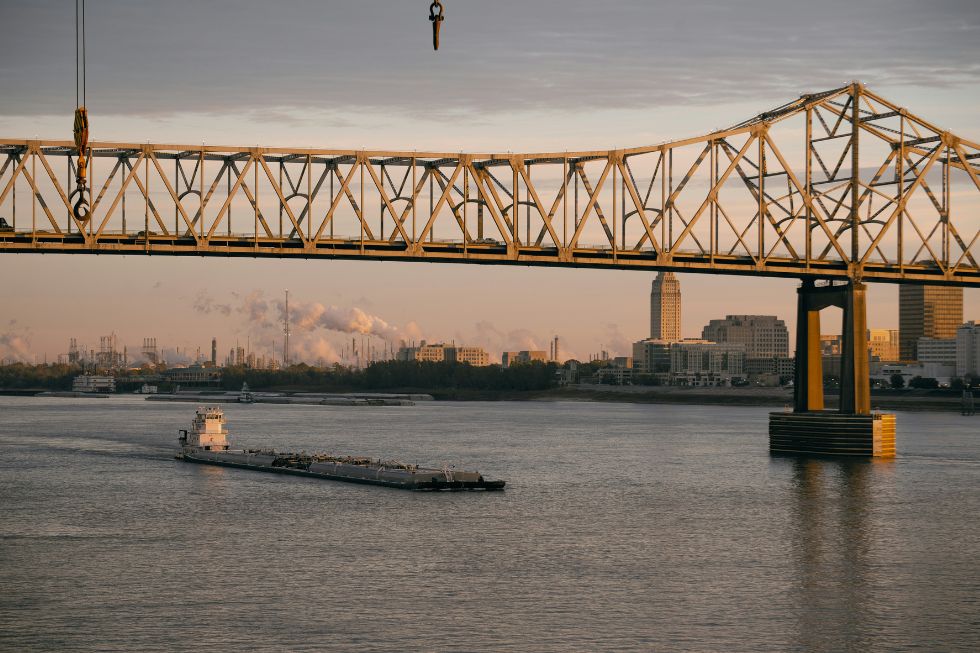
History teaches people to be rightly wary of this. Releasing treated oil and gas wastewater into streams has a few main issues: (1.) process failures result in untreated water being released into the stream, or (2.) capacity failures like floodwater inundation result in the release of contaminants into the stream. These are not insurmountable problems if the local risk management rules are clear and specific like they usually are for water quality. The alternatives are underground injection or no-discharge treatment facilities and these each have their own risks. | https://bit.ly/4x6qp1v
There is [maybe not] surprisingly little research on AI use in the field of EHS and related professions. The potential upside is increasing the rate of learning by personnel and increasing efficiency on the menial tasks of the job, maybe even improving decision making on risk mitigation. Downsides could involve losing touch of the ethics and risk attentiveness that make EHS personnel critical to any organization and introducing blind spots into risk management. | https://bit.ly/4wUAZsw
Want to investigate how AI models could impact EHS recommendations and risk management decisions? Get in touch! This topic needs a lot of attention, and it needs it right now.
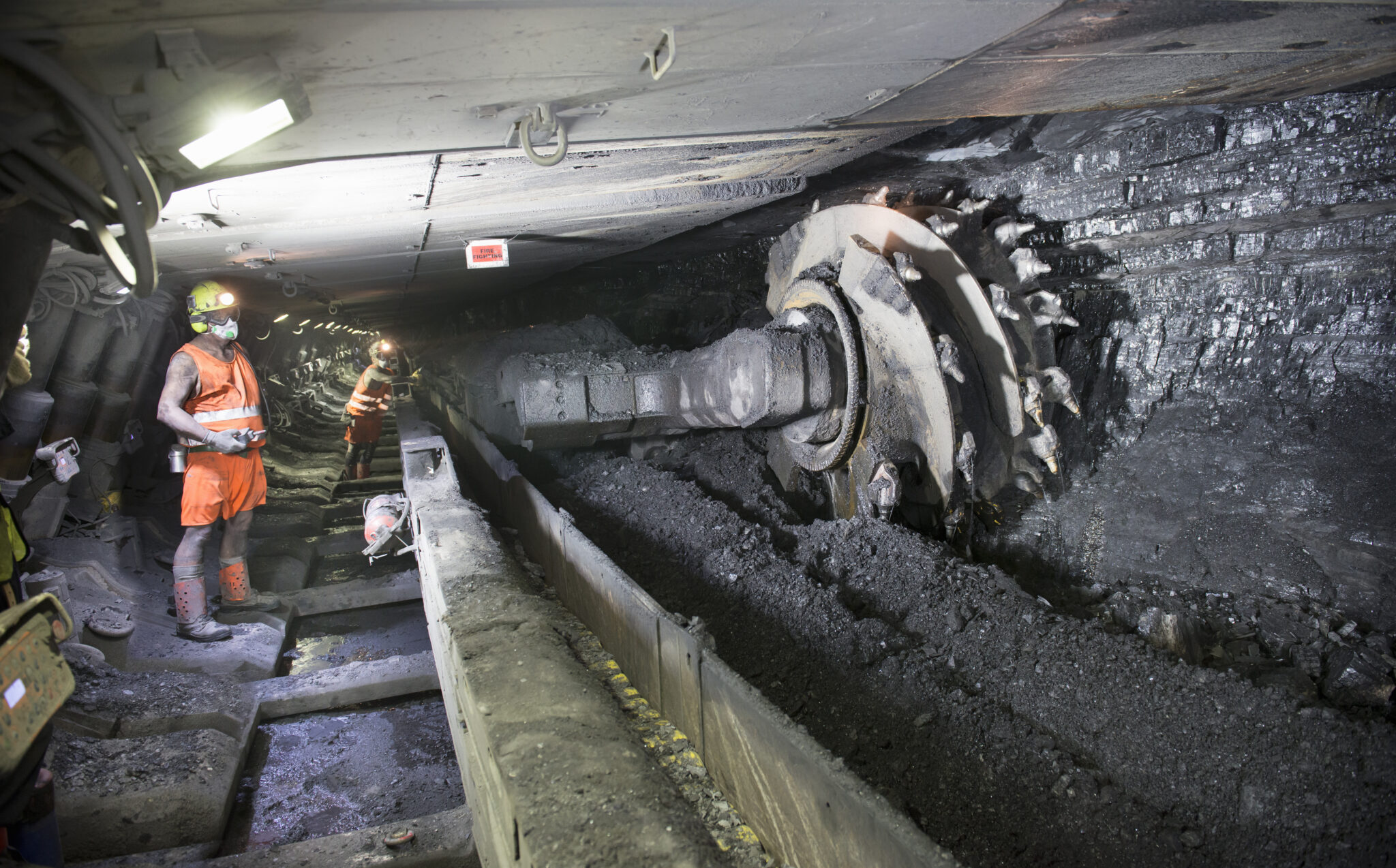
Black lung disease in US coal miners is a persistent problem, not one of the past. Before NIOSH staff were cut by 90%, I sat in meetings and presentations to discuss this issue with them. Increased silica content in the coal dust is a contributing factor along with some technological changes in the industry. It is solvable problem however, and both congress and the power companies need to address it. We should not sacrifice the health of workers just to keep the lights on. | https://bit.ly/4xsjG2Y
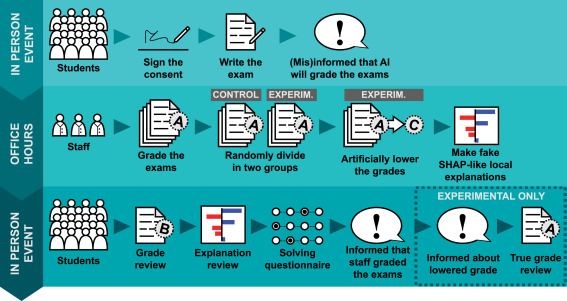
Do people trust AI models too much? This paper suggests that in an academic setting students subjected to unfair scoring trusted the model output similarly to those who received fair scoring when the model explained itself. Will this hold up in other contexts? | https://bit.ly/4zAu2zd
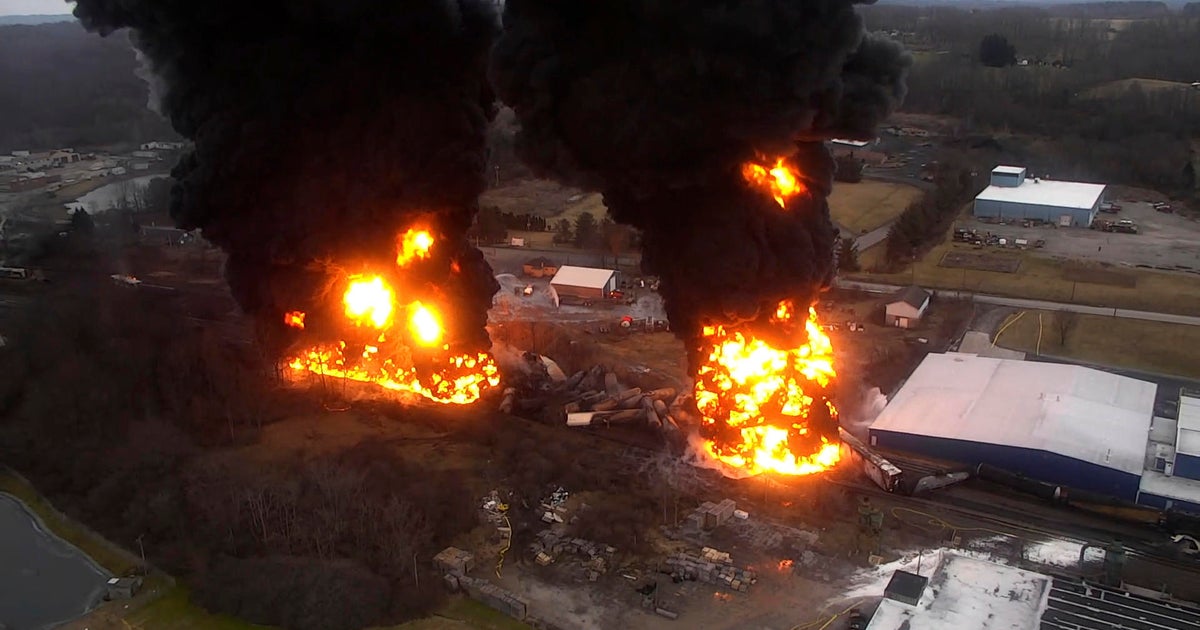
In news stories on chemical exposures, reporters and researchers should be careful to specify concentrations and compare those concentrations to known safety limits rather than just detected vs. not detected. This report is early, a small sample size, and there is more work to be done, but being able to differentiate between concerns, emergencies, and interesting science is critical in risk communication. | https://www.cbsnews.com/pittsburgh/news/east-palestine-train-derailment-urine-samples/
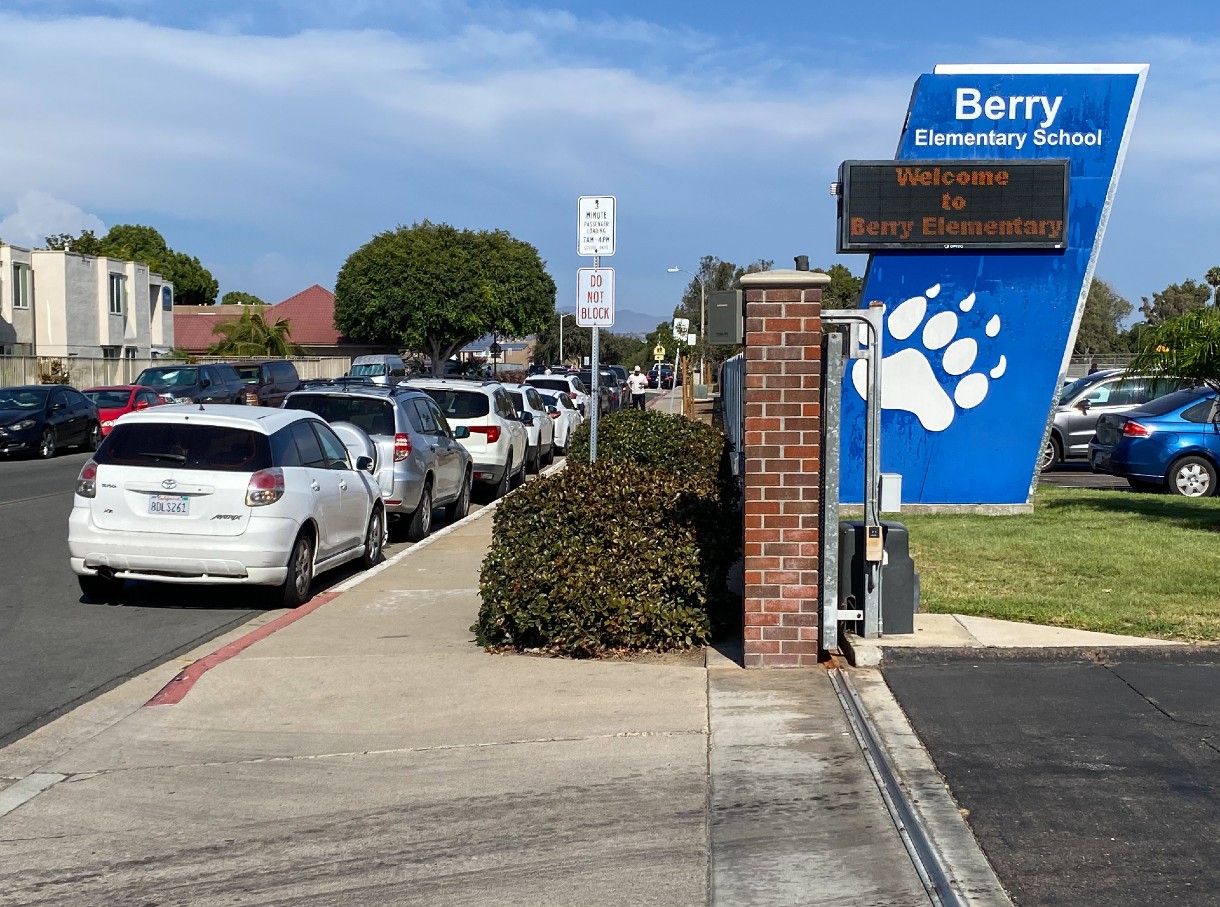
Improvements in safety come from the hundreds or thousands of tiny improvements we make site by site, and facility by facility, and operation by operation. Slightly slower speed limits in school zones and better markings are relatively small costs. | https://bit.ly/4cB2PCM
The externalities associated with data center development (air pollution, noise, increased grid power prices) are all potentially mitigated by engineering design, but this requires clear rule making and transparent validation to build confidence. The long-term issues for this industry and state and local governments that will come from inadequate management, and the loss of public confidence could greatly outweigh any temporary gains from early development. | https://bit.ly/3UhVEZZ
Although Texas rejects heat safety regulation for workers, they have put a system in place for children in schools: https://bit.ly/3TXuo2B. This is great. Just realize that everyone’s safety should be a public concern.
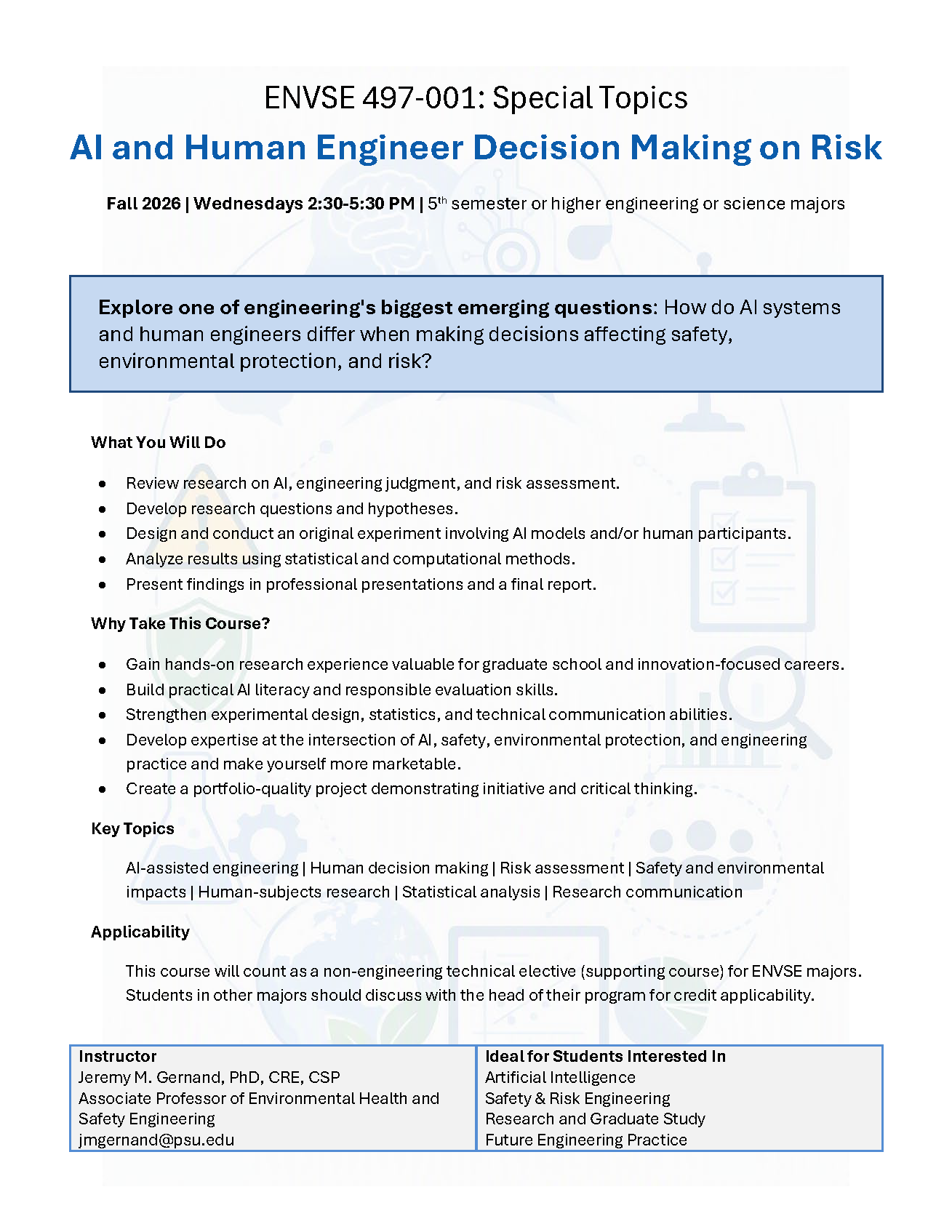
Excited to be piloting a new course this Fall semester studying how AI models and Human Beings are similar or different when asked to make a risk-related engineering decision. This is one of the most pressing current issues in our field and could affect how we manage AI use in the future.
Students will develop and run an experiment, collecting real, original data, and present something new, that no one has seen before. I can’t wait!
The press commentary on permanent daylight saving time (DST) in the US is really confusing the point and misleading people when they need to be ready to advocate for themselves and not expect whatever happens in Congress to be the end of the story. So, here’s the deal (from a safety and health perspective):
– Having nearly the entire country of 340 million people suddenly change schedules by a whole hour causes more accidents as people lose sleep (Spring) or stay out late anticipating getting more sleep (Fall) or have to go out or return home in darkness when that had not been true the day before. Stopping this change would be an improvement. – There’s nothing that forces us to start work or school at 8:30am or 7:47am or any other time. That is a decision entirely under control of each school board or workplace management team. Also, that time does not have to be consistent throughout the entire year. It could change depending on season as many businesses already do in the summer. We could start work at 9:00am in the winter and 8:00am during the rest of the year for instance, if that makes sense for our community. – There are health benefits to having work or school start at a certain time relative to when the sun rises. What time the sun rises depends on the season, how far north or south you are, and your relative east-west position in your time zone. There is an “ideal” time to wake up for most people related to the time of dawn/sun rise, not some arbitrary number on the clock. This is true for both adults and children, and for children this time varies with age. DST fixes this for some locations and disrupts it for others.
So, what should we do? Get the data on when the sun rises and sets in your location throughout the year. Discuss school start times with your school board or work management: ideally 1-2 hours after sunrise for elementary school students, for example. See when the chosen start time goes outside the ideal range and then consider adjusting the time for those weeks or months. For communities in the southern US, no adjustments may be needed, but those in northern states may want to set a winter schedule to optimize safety and learning.
Some places would still be changing time then? Yes, but only those where the safety and health benefits of the change outweigh the harms and disruption of the change. Some may not change at all, and others only change their start times by 30 min.
And, by the way, if we keep the biannual DST adjustment, we can still do this. If a community doesn’t need the 1-hour DST clock adjustment, they can change their start times to counteract that time change and maintain their start time relative to sunrise. Back when we started this, we didn’t know what we know now about the science of circadian rhythms, learning potential, accidents, and health impacts. We do now, and we need to take it into account to make work and school as beneficial as possible including optimizing how we set start times.
Low cost air quality sensors are an excellent tool for capturing trends in pollutant concentrations in an area, but they are not without certain limitations as this article describes: https://bit.ly/4tJA2BJThese limitations can be partially overcome with calibration (possible in certain laboratories like ours) and model corrections. But, since not everyone is able to do that, here’s what you should know about the results you get from these sensors: they are generally right on trends (if they say concentrations are increasing, they probably are) but not necessarily right on reported levels (if the sensor reads 20 micrograms per cubic meter, it might really be 15 or 12 or 25). The sensors are impacted by humidity as well as the characteristics of the particulate matter being measured (particle size distribution, shape, composition, etc.). These are a valuable tool for deciding where we need to collect more careful data.
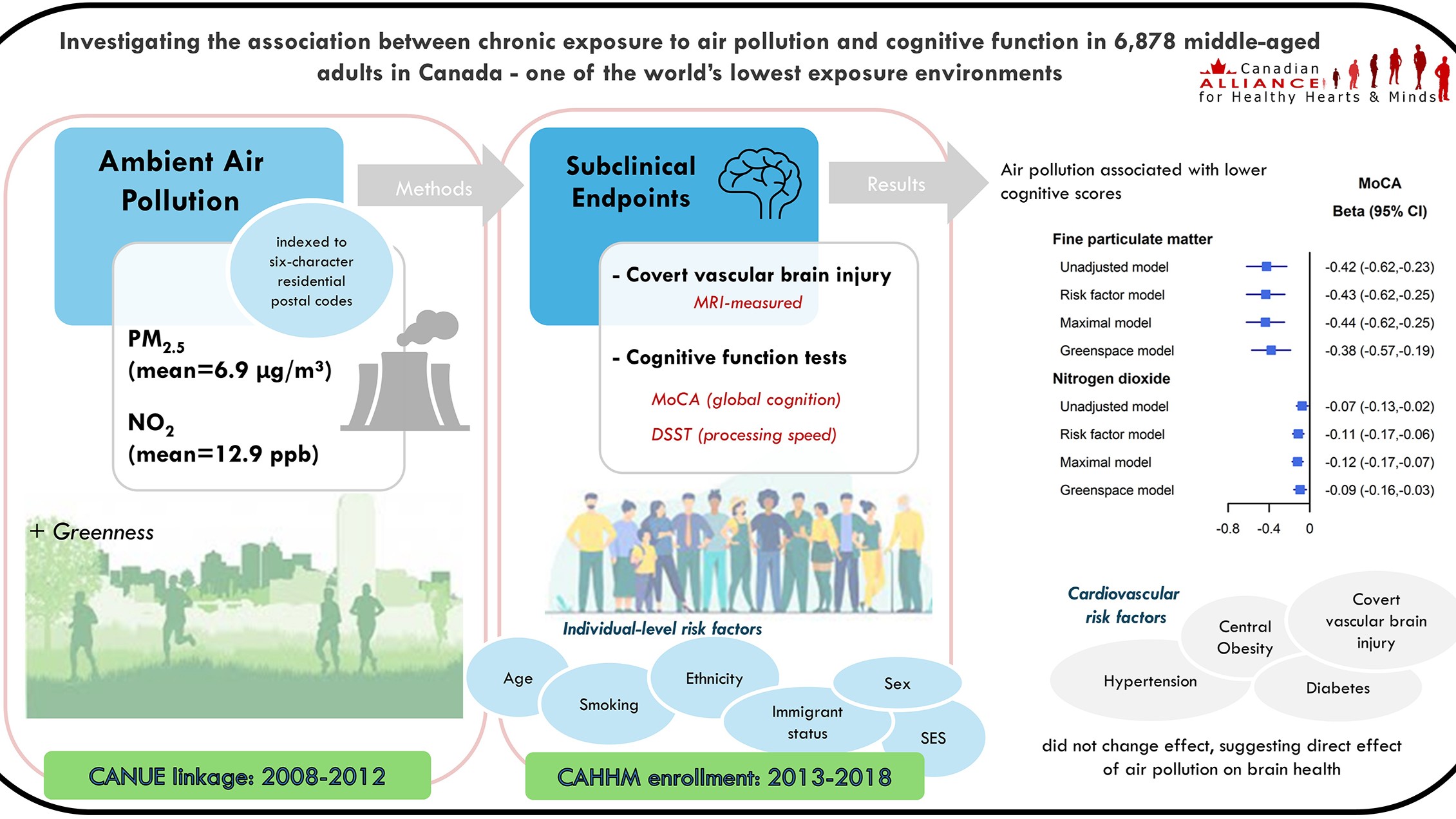
As we clean up large sources of toxic air pollutant exposure in our environment, we are able to find things like this: a study linking exposure to particulate matter and NO2 to cognitive decline: https://bit.ly/43hIzRw
The mean exposure in this study was 6.9 micrograms of particulate matter per cubic meter, and 12.9 parts per billion of nitrogen dioxide, both of which are considerably lower than the US National Air Quality Standards for these pollutants of 15 mcg/m3 for PM2.5 and 53 ppb for NO2.
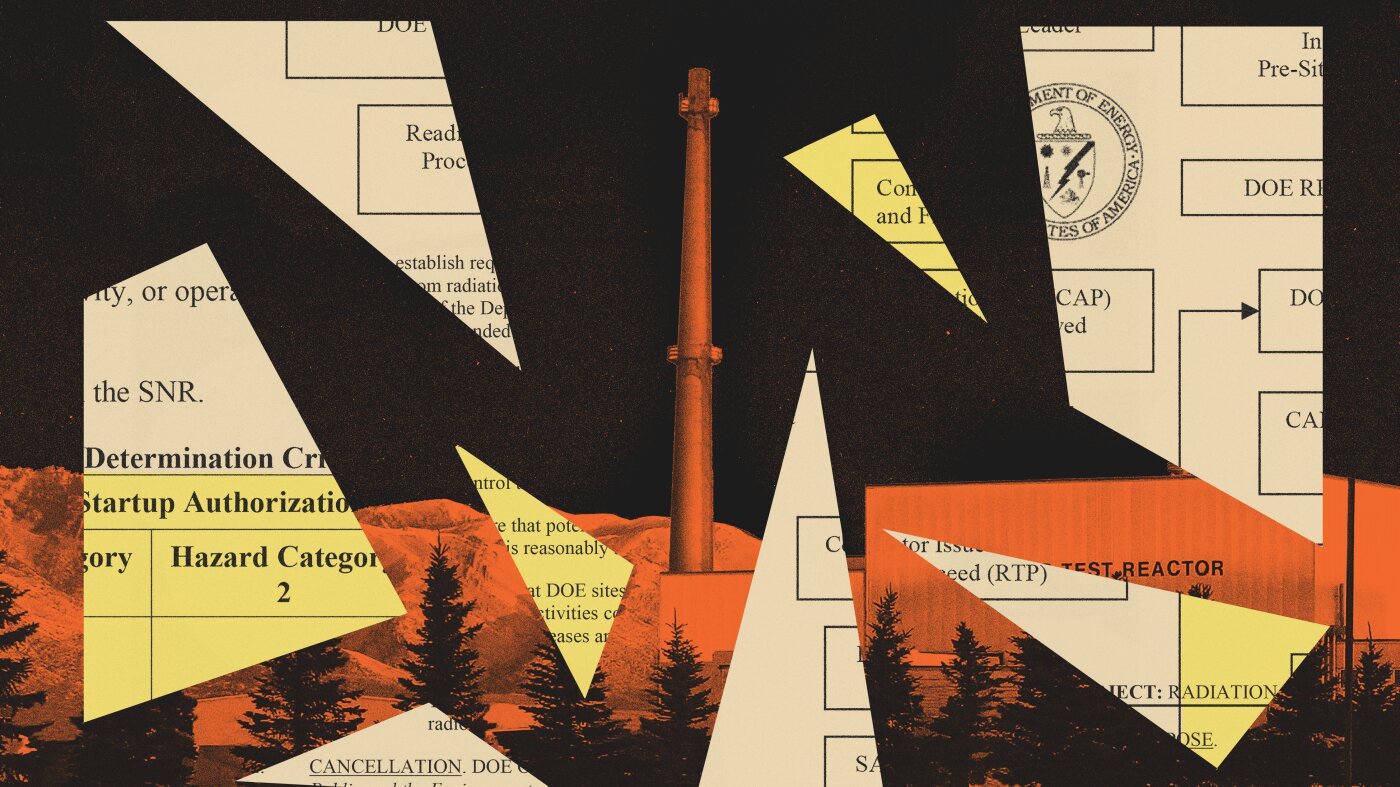
Nuclear power is generally safe, reliable, and has a lower environmental impact than alternatives, but faces general public distrust and fear. Changes to NRC directives recently reported on < https://n.pr/4kfQqXG> that reduce safety requirements without public review run counter to nuclear power’s main impediment to growth. Many of these changes don’t even seem to reduce cost, so their utility to anyone is in question.
The safety of AI in medical devices is another version of a question being faced in many different industries right now, but is not an entirely new kind of problem. AI is just elaborate code and algebra, too lengthy and complex for review by a human being, but still quantifiable. The question of how much review and testing is necessary to determine safety is what we need to figure out how to answer. Testing for safety still has value however, and resigning ourselves to constantly changing operational parameters that may occasionally result in disastrous consequences is not something we have to do.
I remain unclear on what the administration means by this announcement: https://n.pr/4bCWOpr. Cost effectiveness analysis is a way to quantify the cost of health benefits without putting a dollar amount on the value of those benefits directly in the way benefit-cost analysis does. But the health costs of exposure to pollutants or contaminants in treating the resulting cancer, cardiopulmonary disease, and other issues is significant. Nearly all pollution and contaminant exposure regulations are justified on the basis of offsetting these significant health costs. If we do not consider reduced health costs in the calculation, all regulations from limiting lead in food and water, to reducing toxic chemicals in the air might not be justifiable and would look oddly expensive. It may be hard to notice clarifications on this in the future given but the legal basis for all regulation might be at stake.
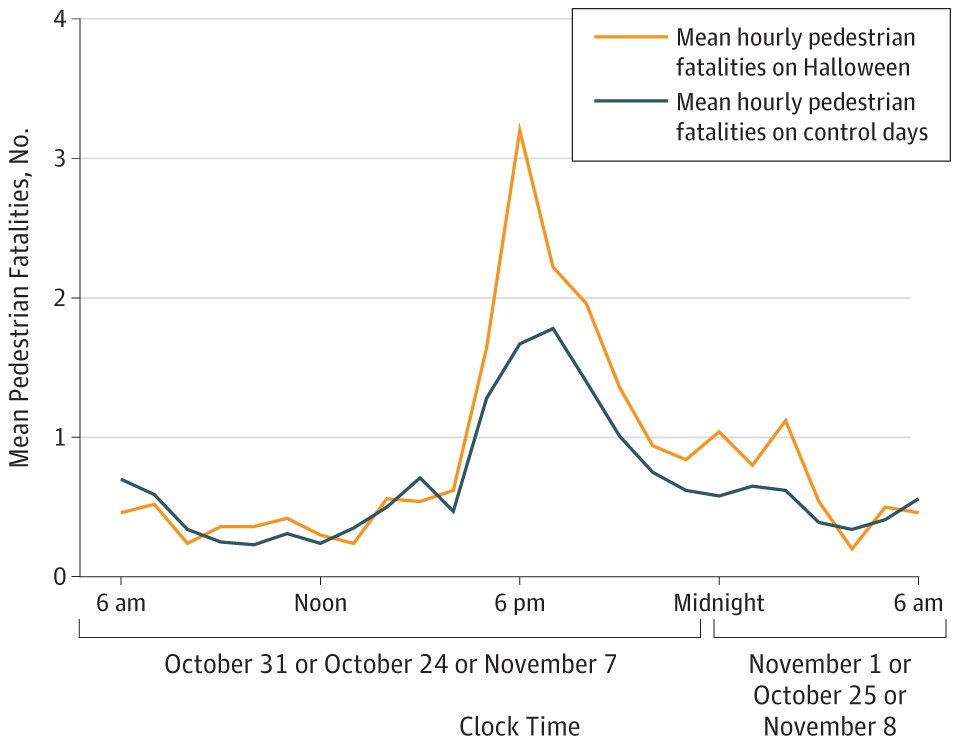
The most significant Halloween safety risk for most participants is auto-pedestrian crashes. Large numbers of pedestrians present in places where they are not normally at night and wearing strange clothes that can impede their own and others’ visibility. These studies found a 43% higher risk on Halloween in the US: https://bit.ly/4ntKQ3W, and 34% higher in the UK: https://bit.ly/47dcJs6.
Wear bright visible costumes (they manufacture black reflective tape and fabric now, in case you don’t want to go looking like a safety worker), go in groups with a designated lookout, adult supervision is essential for small children, and don’t trick-or-treat under the influence.
Capturing carbon dioxide from pre-combustion natural gas (https://politi.co/47gbJSE) does not have the same co-benefits for reduced health-related effects from emissions as capturing CO2 from exhaust gasses. I’m not for the perfect being the enemy of the good, but maybe public investment should encourage more exhaust capture since this will have immediate health-related benefits and similar climate mitigation to this pre-combustion capture. This seems to be a carbon permit finance-related low-hanging-fruit-type project in CA.
In one of the most resounding safety victories of the past 40 years, firefighters spend less time fighting fires, and people and buildings are less likely to be lost to fire (50% fewer deaths according to Vox: https://bit.ly/4pKALBJ). There was no magic bullet. It was a long series of unexciting improvements in warning devices, building codes, regulations, reduced indoor smoking, and safer electrical systems. This isn’t automatic. It takes investment, effort, research, and good decision making, but when we agree on the objective, this kind of result is achievable.
New data on the air quality impacts of 3D printers in classrooms from UL shows these are of minimal concern, at least with proper ventilation in the school (https://bit.ly/4999W4j).Short lived increases in ultrafine particles and VOCs were observed. And since printers are unlikely to be operating continuously, the type of low temperature polymer 3D printers used in schools appear to be low risk. While not all studied printers have previously been so “clean”. 3D printing in general likely holds promise to significantly reduce exposures to operators from more traditional milling and welding processes as the technology continues to develop.
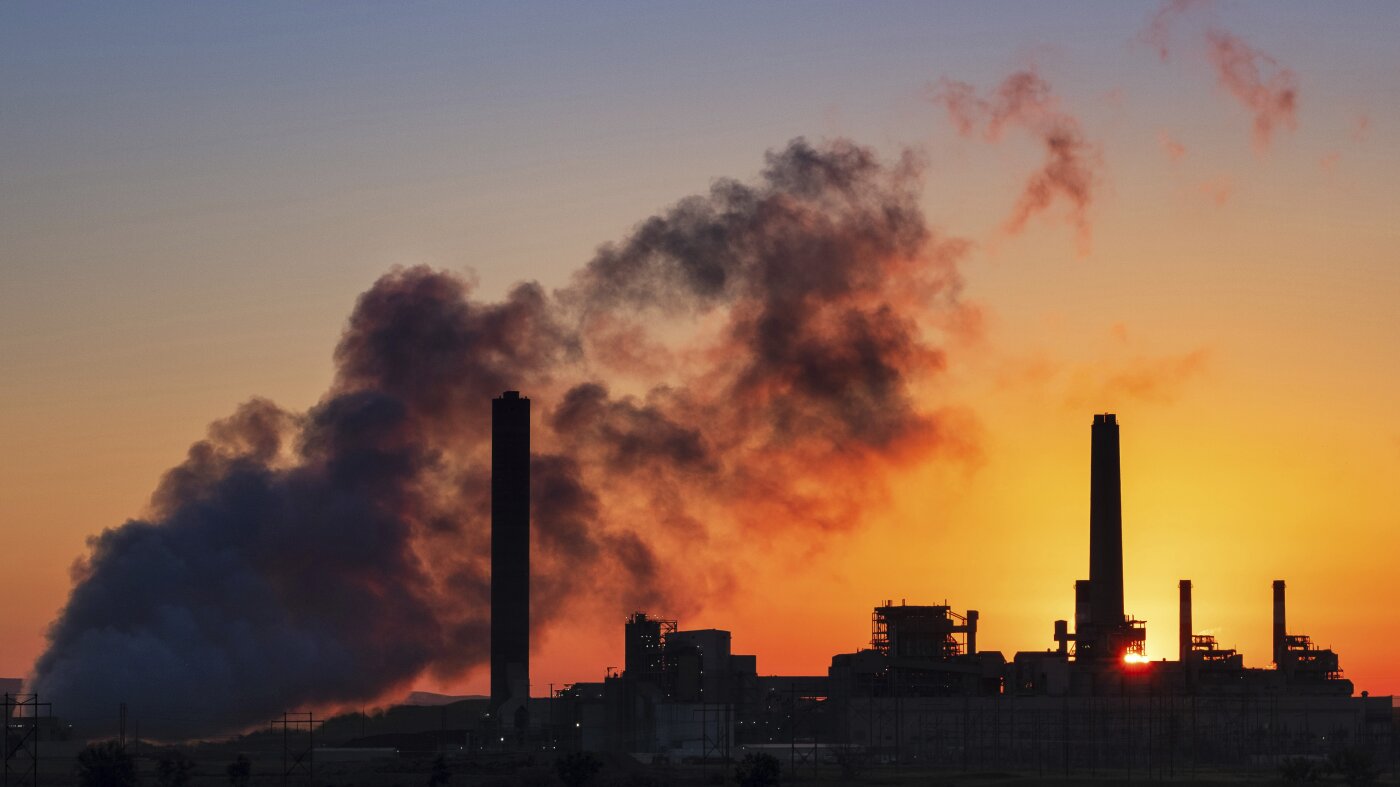
Tunisian violent protest over air quality and pollution concerns https://bit.ly/48yDXul. People have little control over the air they breathe. Wherever we live, we need some independent authority to manage emissions to the air whether that’s from major industries like this case, or from households burning fuel for heat and cooking. It can’t be “anything goes”. In this case, people express their anger at a long running issue that has not been resolved. There exist solutions to mitigate these emissions. It is only a matter of investment and attention.