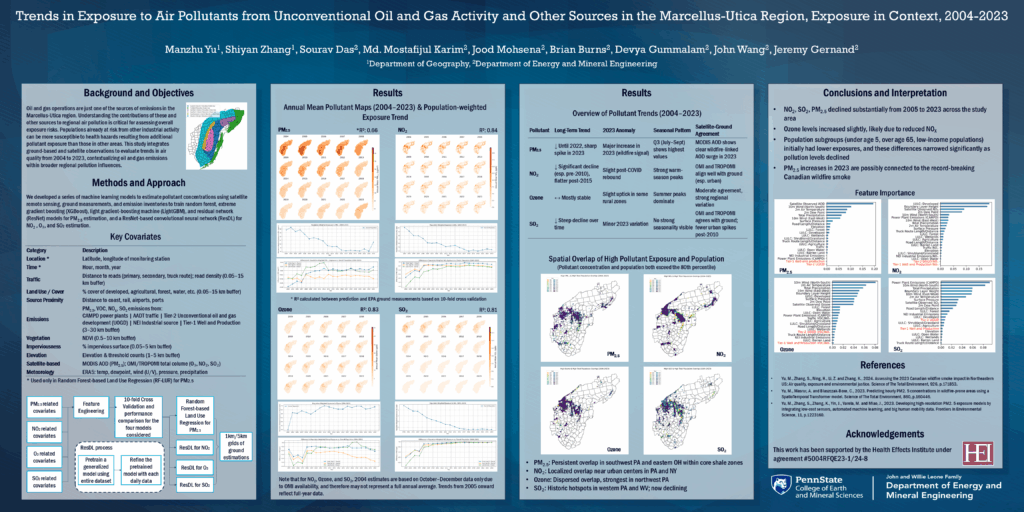
Our team’s preliminary research presented today at the Health Effects Institute Annual Conference shows that the overall trend of exposure to air pollutants in the Marcellus region has been steadily improving during the rise of the natural gas industry with only ozone bucking this trend. This was an interesting application of machine learning models to satellite observations and ground measures. While the reasons for this have not yet been tested, it seems to be the result of several factors including the displacement of coal as an energy source, the introduction of low sulfur diesel, and the decline of the region’s industrial activity. These trends counteracted the small increases that occurred due to the natural gas industry.
Leave a Reply