Associate Professor of Environmental Health and Safety Engineering
John and Willie Leone Department of Energy and Mineral Engineering
College of Earth and Mineral Sciences
The Pennsylvania State University, University Park, PA, USA
This is an interesting air pollution visualization tool: https://bit.ly/47kfo32.I’m still trying to work out the details of how the ‘puffs’ of particulate matter fade/disperse. This only include major emitters, so many local sources, especially numerous ones like vehicle traffic and home heating, are not included. It is a useful way to visualize how pollution disperses across an area from a single origin point, but it is not a complete picture of exposure.
New paper links trichloroethylene (TCE) exposure to Parkinson’s disease (https://bit.ly/3L9rof6). TCE is a degreasing agent, has previously been used in dry cleaning and coffee decaffeination, and helps produce other chemicals. Using EPA national air toxics assessment has some uncertainty when applied to low concentration chemicals like TCE and come correlated exposure may in fact be more responsible, but identifying the locations to test this idea is a valuable step. The reported increase in risk from TCE exposure is about 10%. It is important to note that the reason we can identify effects of this magnitude from exposure concentrations 2-3 orders of magnitude below the OSHA permissible exposure limit is partly due to the improvements in environmental quality that have been achieved over the past few decades. (https://bit.ly/4o2q77N )
Managing air quality in warm sunny places is challenging as this experience in Texas shows (https://bit.ly/42oYsWr). The photochemical effects make the same emissions more harmful than they would be in a colder, cloudier place. But this isn’t new; the methods for improving air quality are mostly well understood, and lessons from other cities show that rapid progress can be made. The public health burden of ozone and other pollutants is considerable as it results in additional asthma, cardiovascular disease, and premature death. Individuals can’t really control their exposure to air pollution by themselves, but upgrading technology and changing practices can collectively have incredibly positive impact.
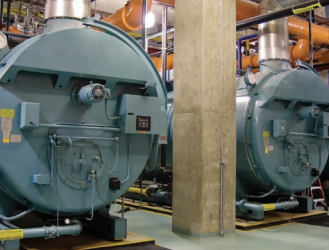
New study from American Lung Assocation suggests that replacing industrial boilers with heat pumps by 2050 would prevent 77,200 premature deaths and 204,000 asthma cases (https://bit.ly/46HchSF). Electrifying building and some process heat doesn’t eliminate all emissions as most are transferred back to the power plants on the local grid, but power plants are more efficient, better maintained, and produce fewer pollutants per unit of energy than small scale installations like oil or natural gas boilers for individual buildings. This amounts to 6 prevented cases of asthma and 2.3 prevented fatalities per replaced boiler. Most of this technology is ready today and helping people breathe easier is an immense benefit to quality of life and productivity.
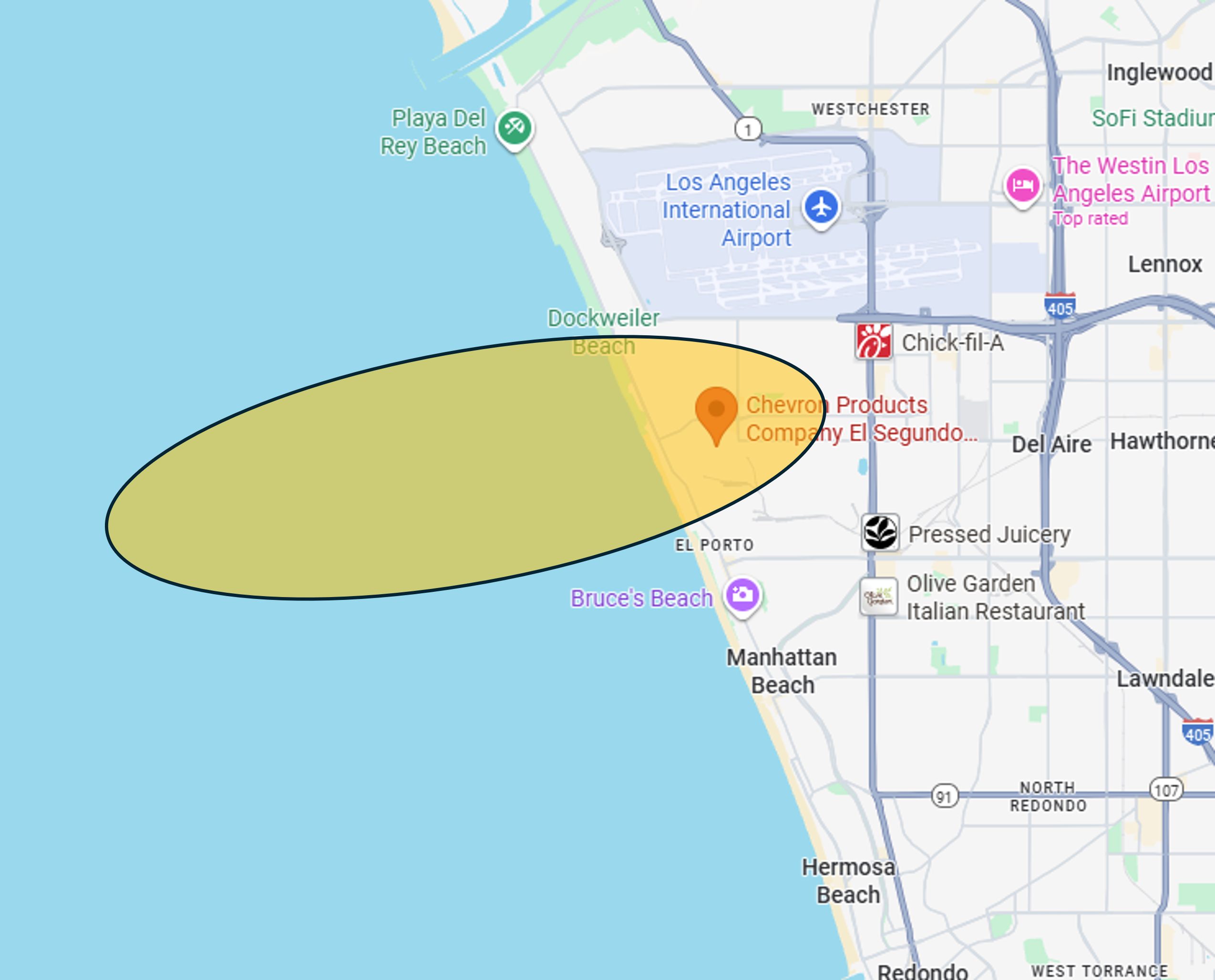
We really need rapid response risk maps available to media in the event of major pollution events like the refinery fire in El Segundo, CA this past Thursday (https://bit.ly/4gZEcke). In the same way as we do with hurricanes, people need to know if they are in a region of concern or not at a glance, and maps work better than text descriptions now that most have smartphones. Knowing current wind patterns, adding data from sensor networks where available, and previous similar events (fires, releases, spills, etc.) can be enough to make quick predictions in minutes of where people need to take action or not. The EPA or NWS could do this, and it would be invaluable to emergency management. Like this case, many of these will not be major exposure events, but we should have the ability to show people to engender trust as to why they were not at significant risk.
We usually think of indoor air quality and temperature as primarily a comfort issue, a modern convenience that we should be able to do without, but that’s not the whole story. When it’s too hot, we make worse decisions (http://bit.ly/4gWaqNg) and take risks (http://bit.ly/48cICSy). We don’t perform as well on cognitive tests when there’s more fine particulate matter in the air (https://bit.ly/4nxaFAN) or elevated carbon dioxide (https://bit.ly/3VLVkQF), a sign of poor ventilation. And these aren’t the only relevant factors. Impacts on chronic disease also occur. Having clean, comfortable indoor air is a health and safety issue and we pay a cost when it isn’t provided in more human error.
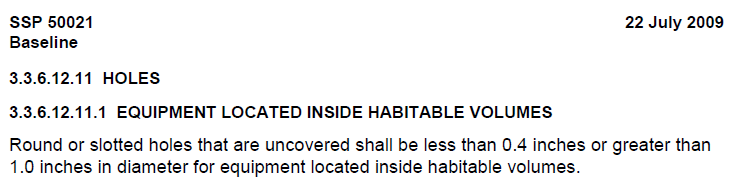
This is my favorite International Space Station safety requirement. I sat in far too many meetings discussing what the objective of this was and what was sufficient rationale, if any existed, to waive it (we did in fact, waive it for the ARED weight machine, after a design change that limited the hole in question to a depth of about half an inch). Is a half-inch deep feature still a hole?
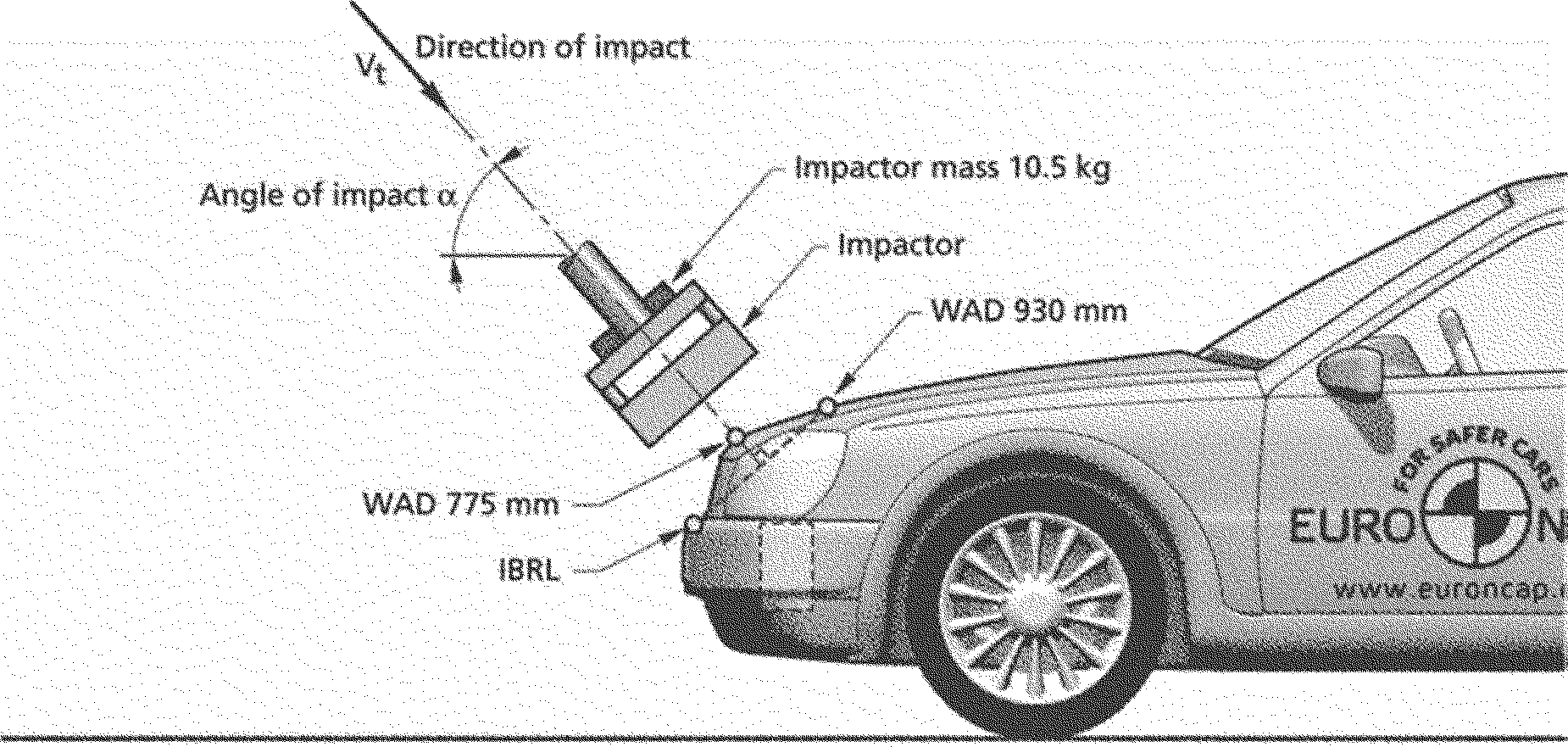
NHTSA delays new rules on auto pedestrian impact safety testing until the 2027 model year: https://bit.ly/4pNVTqN. Pedestrian deaths from vehicle impacts number more than 7,300 per year in the US. A value that has increased in recent years and remained stubbornly high. NHTSA fails to provide an estimate of the cost and effectiveness of this modified safety rating system, and so the quantitative cost of delay is unclear. This is likely because safety ratings and their perception by the public in the future is not obvious, but this is a poor excuse in my opinion. Uncertainty clearly exists and may be substantial, but that doesn’t mean that we won’t know the range of likely outcomes. These studies in Germany and Sweden show how such a prediction could be made: https://bit.ly/42gFm4S; https://bit.ly/42Yy5Xs.
Notifying consumers about risk is important but needs to account for exposure, potency, and dose and not just the toxic profile of the chemical in question. CA’s prop 65 did not reduce chemical exposure on average, and encouraged companies to switch to unlisted chemicals which are less understood: https://bit.ly/46KPcx0
Should a chemical that can cause cancer in 40% of individuals at dose of 1 nanogram of the chemical per kilogram of bodyweight have the same warning as one that can cause cancer in 2% of individuals at a dose of 1 gram of the chemical per kilogram of bodyweight? Does it matter if the product contains 500 grams or 5 micrograms of that chemical? Or should each just be labeled: “contains a substance that could cause cancer”? The world is complex, and simple messages are important, but not when they decrease understanding. A simple scale could account for dose, toxic potency, and uncertainty, and increase public understanding more than the current warning system.
The UK Office for Nuclear Regulation (ONR) plans a 3-phase review and update of its safety assessment principles (SAPs), with the second phase being an “AI-enhanced drafting” (http://bit.ly/4gFwlrL).To me, it’s unclear what exactly they mean by that, but this sounds like a responsible use of AI in developing safety-related documents with plenty of expert and public comment opportunities before and after this step. Where we are currently on shakier ground is when we try to employ AI to do analysis or assessment but using it to help us write more clearly is probably a good idea.
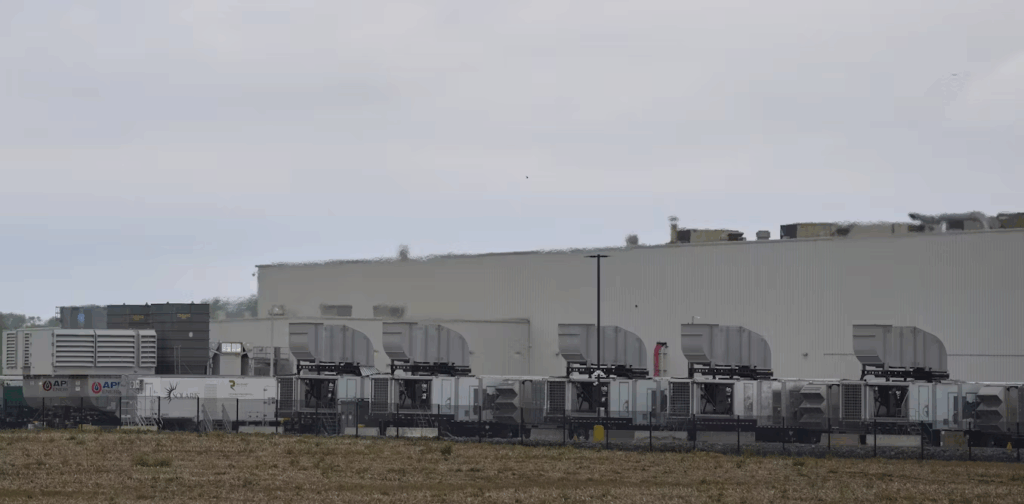
Data centers and server farms are proliferating across the United States and other countries, and so, like any new industry, their environmental impact, especially from on-site powerplants and the use of cooling water, needs to be assessed. This analysis of a Memphis data center showed relatively small increases in air pollution from burning natural gas for electricity (https://bit.ly/4mtl3bn), but that is on top of already non-compliant regional air quality. The physical location of data centers is not their most important feature from a functional perspective, so development rules should nudge installations to places that can accept the additional pollution with less of an impact on people’s health.
Airlines should do more to make sure passengers don’t try to evacuate with their carry-on bags, FAA says (https://cnn.it/3VZJy5b) | Ok, but “do more” is pretty vague… requiring passenger evacuation drills on a regular basis would help, but is not feasible for some travelers; having overhead bins automatically lock during an evacuation might help, but could also backfire; automated, repeated instructions during evacuation might help a little, but this is unclear. Experimentation is needed, but difficult to pull off as a realistic, true-to-life scenario. The FAA should fund research to help resolve this issue.
Legislative proposal to require more data sharing for autonomous vehicles is a good start (https://bit.ly/46AE4Th), but why limit such information to collisions, unplanned stoppages, and total miles? Adding “near misses” would dramatically improve the usefulness of this data.
OSHA cites a DC Circuit Court dissent (non-majority opinion) in SeaWorld vs. Perez (2014) as justification to define certain performance or professional activities as “inherently risky” and outside the scope of the general duty clause that states that employers are required to furnish a workplace “free from recognized hazards”. As written, this proposed rule change only applies to a small number of performers in the arts and athletics, which calls into question whether this is a necessary regulatory change rather than an internal agency policy on enforcement.
However, the proposal asks the public for other examples of inherently risky workplace conditions [II.1] and “welcomes comment” on defining key terms in the proposed rule (presumably including “inherently risky”) [II.6], so it is possible this will be applied to other industries in the future. It is worth mentioning that what the general duty clause requires is use of the best available processes and technology to mitigate hazards, not the elimination of entire categories of activity or key industries (rules with these kinds of effects are already prohibited).
Public comments remain open on this proposal until November 1st, 2025: https://bit.ly/4ppq47z
Are safety-related product recalls increasing? https://bit.ly/4nBrIkK Recalls indicate a failure of design and process control that put users at risk. How these recalls are quantified is probably a matter for further research, but it is possible that supply chain disruptions in the current economic climate are partly responsible. Recalls are expensive (and non-recalls of real problems even more so), and most organizations would have chosen differently if they could have known. Safety engineering and risk management is the way we quantify these issues in advance and make better informed decisions. How much value would this information have to these companies?
This new proposed rule from DHS limiting all student visas to no more than 4 years is just going to increase administrative burdens while doing nothing to increase US security or identify fraudulent academic programs.
Many academic programs are able to be completed in 4 years. This includes bachelor’s degrees, and nearly all master’s degrees. Bachelor’s degrees take an additional semester or a year sometimes if a student changes their major during their course of study (a relatively routine occurrence). Many PhDs, however, can routinely exceed a 4-year timeframe, especially for students who begin them directly following their undergraduate degrees. There is no reason to burden these students with the uncertainty of a visa extension request at the most critical stage of their research. DHS can already investigate potentially fraudulent academic programs and visa holders with potentially nefarious purposes without this arbitrary time limit.
There were 43 mostly deregulatory changes proposed by MSHA and OSHA in the federal register on July 1, 2025. These need a closer examination during the current 60 days of the public comment period. Some of these changes appear to be of minimal impact (like removing rules for how to use some outdated technology), but changes to how the general duty clause is interpreted may be more significant.
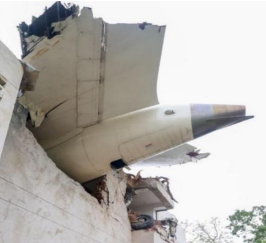
There was recently a flurry of speculation around the preliminary report on the cause of the Air India 787 crash in June. This centered around an apparent action to cut off the fuel to the engines by the captain. There is sometimes a rush to blame “pilot error” and update training programs, but this can be a mistake that shortchanges the possibility of more effective risk mitigation. The question we should be asking is “why would our system allow a person to take such an action?” All aspects of the aircraft that we give pilots control over and the aspects that we put under automatic control are choices that we make when we design an airplane.
If, in fact, a pilot did mistakenly or even purposely cut off fuel during ascent, the question we ought to ask is not “why would they do that?”, but “why do we give a pilot that option?”
No one asked me, but this administrative relocation of EHS at Penn State from OPP (office of physical plant) an infrastructure-aligned office to UPPS (university police and public safety) an enforcement and emergency response-aligned office seems to be a step backward.
EHS at universities is a challenging environment. While most organizations do the same activities over and over again, universities, especially their laboratories, are constantly trying new things all the time, in many cases with relatively inexperienced workers (students and other trainees). However, none of this changes the fact that the best mitigations for hazards that affect people and the environment are design-based mitigations, rather than setting up rules that have to be enforced to be effective.
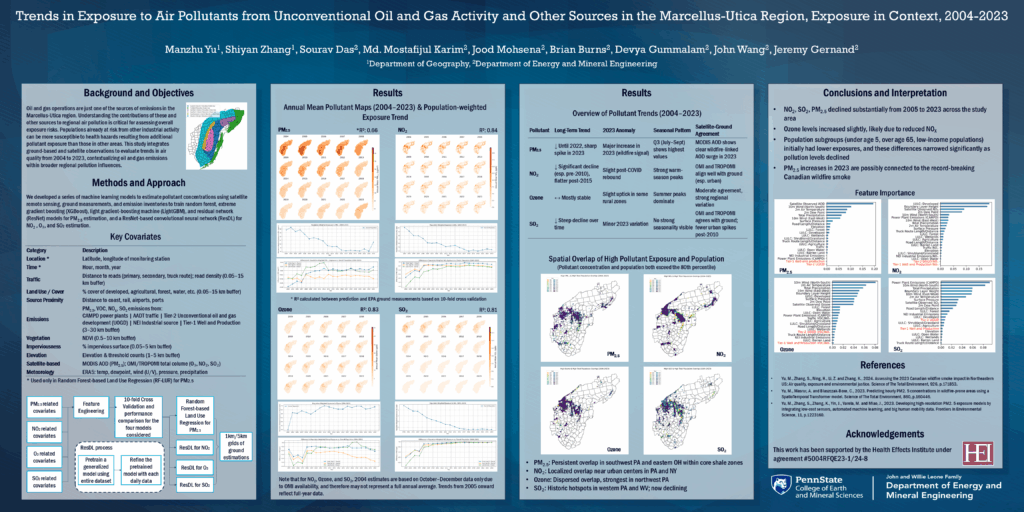
Our team’s preliminary research presented today at the Health Effects Institute Annual Conference shows that the overall trend of exposure to air pollutants in the Marcellus region has been steadily improving during the rise of the natural gas industry with only ozone bucking this trend. This was an interesting application of machine learning models to satellite observations and ground measures. While the reasons for this have not yet been tested, it seems to be the result of several factors including the displacement of coal as an energy source, the introduction of low sulfur diesel, and the decline of the region’s industrial activity. These trends counteracted the small increases that occurred due to the natural gas industry.